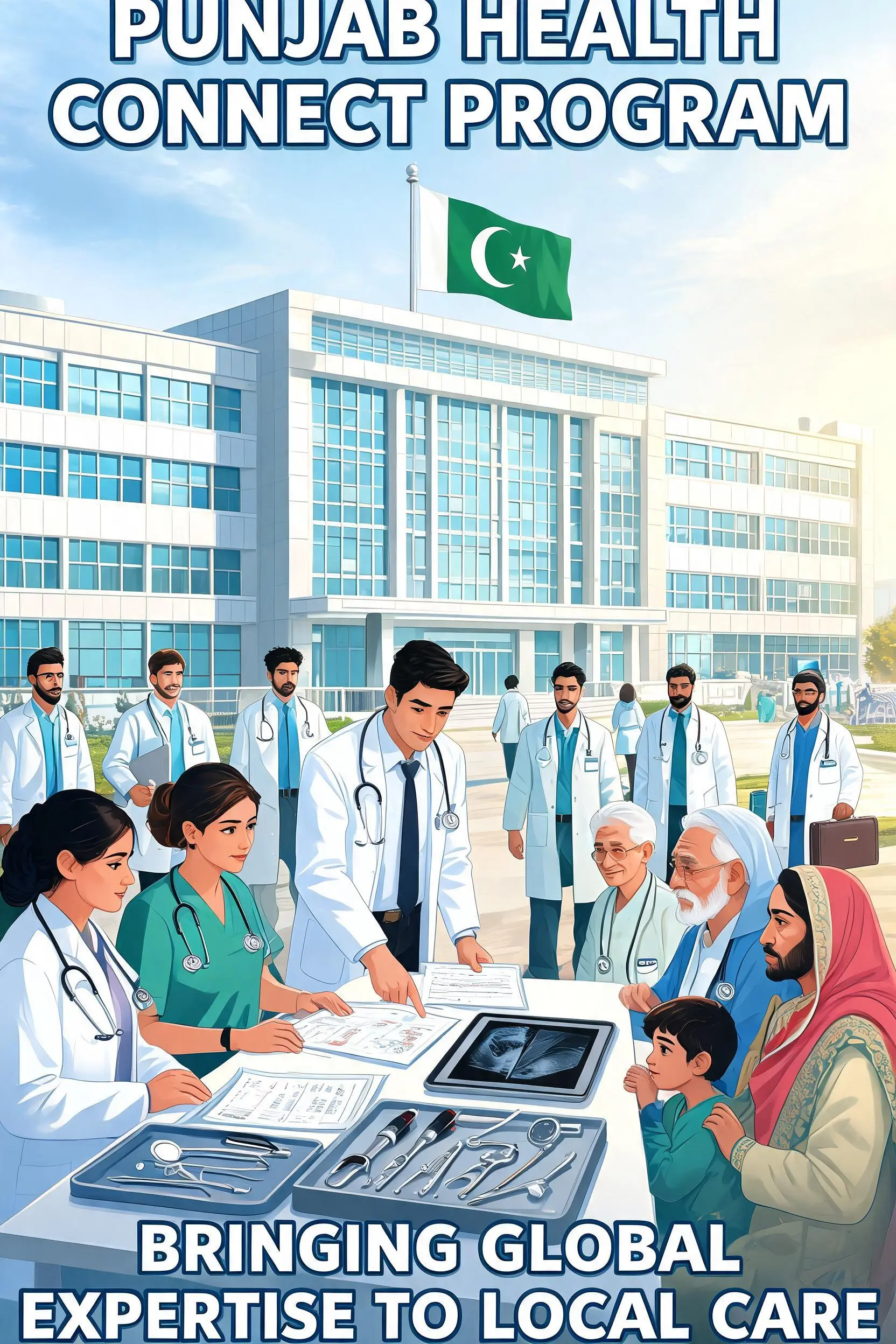
Punjab Health Connect Program: Overseas Doctors to Strengthen Healthcare in Punjab
Punjab is taking another step toward improving public healthcare by introducing the Punjab Health Connect Program, an initiative designed to connect government hospitals with experienced overseas Pakistani doctors and international medical specialists. The program is expected to improve access to advanced medical expertise while creating opportunities for local healthcare professionals to learn from doctors working in some of the world's leading hospitals.
Thousands of patients rely on public hospitals every day, but many require specialized treatment that is not always easily available. By inviting highly qualified doctors from abroad to participate in patient care and medical training, Punjab hopes to make advanced healthcare services more accessible without placing additional financial pressure on patients.
Bringing International Medical Experience to Local Hospitals
Pakistani doctors have built successful careers in countries such as the United Kingdom, the United States, Canada, Australia, and the Gulf region. Many of these professionals possess years of experience in advanced surgeries, critical care, cardiology, oncology, orthopedics, and other specialized medical fields.
The Punjab Health Connect Program creates an opportunity for these specialists to return, even for a limited period, and share their knowledge with hospitals across the province. Their contribution is expected to strengthen clinical services, introduce modern treatment approaches, and support local doctors in managing complex medical cases.
Better Care for Patients
For many families, traveling abroad or seeking treatment in expensive private hospitals is simply not an option. This initiative aims to bridge that gap by bringing international expertise directly to government healthcare facilities.
Patients visiting participating hospitals may receive consultations from specialist doctors, access to advanced surgical procedures, and expert evaluation of complicated medical conditions. As hospitals benefit from the experience of internationally trained physicians, the overall quality of care is also expected to improve.
Supporting Local Doctors Through Knowledge Sharing
The program is not only focused on treating patients but also on investing in Pakistan's medical workforce. Experienced specialists can work alongside local doctors, sharing practical skills, discussing challenging cases, and introducing updated clinical practices that are widely used in modern healthcare systems.
Hands-on workshops, surgical demonstrations, and professional training sessions can help young doctors expand their expertise while encouraging continuous learning within government hospitals. Over time, this exchange of knowledge can strengthen the overall healthcare system and improve patient outcomes.
Why Global Medical Collaboration Matters
Healthcare continues to evolve rapidly, with new treatment methods and technologies emerging every year. Collaboration between local hospitals and internationally experienced doctors allows medical institutions to stay connected with these developments while improving standards of care.
Programs like the Punjab Health Connect Program also help build stronger relationships between Pakistani healthcare institutions and the global medical community. Such partnerships encourage innovation, improve professional development, and ensure that patients benefit from internationally accepted medical practices.
Conclusion
The Punjab Health Connect Program reflects Punjab's commitment to strengthening public healthcare through international collaboration. By welcoming overseas Pakistani and foreign medical specialists, the initiative seeks to improve patient care, support advanced medical treatment, and enhance the skills of local healthcare professionals.
If implemented successfully, the program could become an important model for expanding access to quality healthcare while encouraging experienced doctors from around the world to contribute to Pakistan's medical sector.