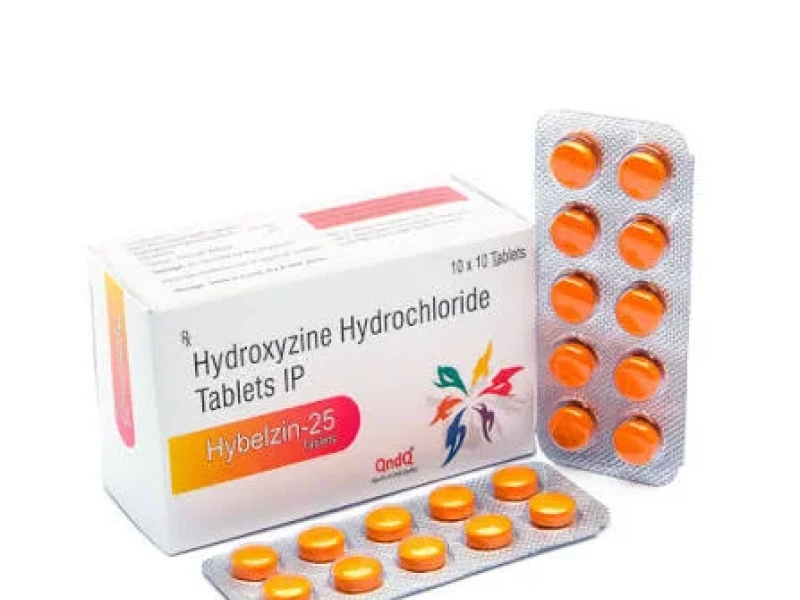
Description
Hydroxyzine is a prescription medicine that belongs to a group of medicines called antihistamines. It is commonly used to relieve itching caused by certain allergic skin conditions and may also be prescribed for short-term management of anxiety or as a sedating medicine before certain medical procedures.
Hydroxyzine works mainly by blocking the action of histamine, a chemical released by the body during allergic reactions. It can also have a calming effect on the central nervous system, which is why it may cause drowsiness.
Hydroxyzine is available in different forms, including tablets, capsules and oral liquid. The exact strength and formulation can vary, so the dose should always be based on the product prescribed by a healthcare professional.
How Does Hydroxyzine Work?
Hydroxyzine blocks H1 histamine receptors, helping reduce the effects of histamine in the body. This can relieve symptoms such as itching, redness and certain allergy-related skin reactions.
Because hydroxyzine can enter the brain, it may also produce a sedative or calming effect. This property can make people feel sleepy and is one reason the medicine may sometimes be prescribed for anxiety or before a medical procedure.
Hydroxyzine for Itching
Hydroxyzine is frequently used to control significant itching associated with allergic skin conditions. It can reduce the sensation of itching and help a person feel more comfortable, particularly when itching interferes with sleep.
However, hydroxyzine treats the symptom of itching rather than necessarily eliminating the underlying cause.
Hydroxyzine and Anxiety
In some situations, doctors prescribe hydroxyzine for short-term relief of anxiety symptoms. Unlike medicines specifically developed for long-term anxiety treatment, hydroxyzine is an antihistamine with a sedating effect.
It is generally used only when considered appropriate by a healthcare professional.
Important Information
Hydroxyzine can cause drowsiness, dizziness and reduced alertness. People taking it should avoid driving or operating machinery until they know how the medicine affects them.
Hydroxyzine may also affect the heart's electrical rhythm in susceptible individuals. People with certain heart conditions or those taking medicines that can prolong the QT interval should discuss this with their doctor before using hydroxyzine.
Uses
Hydroxyzine has several medical uses because it provides both antihistamine and sedating effects. The exact reason for prescribing it depends on the patient's symptoms and medical condition.
Relief of Itching
One of the most common uses of hydroxyzine is to relieve itching associated with allergic skin conditions. It can reduce the sensation of itching by blocking histamine receptors.
This may be useful when itching is severe enough to interfere with daily activities or sleep.
Allergic Skin Reactions
Hydroxyzine may be prescribed for certain allergic skin reactions that cause itching, redness or discomfort. It helps control symptoms while the underlying cause is assessed or treated.
Hives
Hydroxyzine may help reduce itching associated with urticaria (hives). Hives can cause raised, itchy areas on the skin and may occur due to allergies, infections, medicines or other triggers.
Anxiety
Doctors may prescribe hydroxyzine for short-term management of anxiety in selected patients. Its calming and sedating properties may reduce feelings of nervousness or tension.
It is not generally considered a first-choice long-term treatment for chronic anxiety, and treatment should be individualized by a healthcare professional.
Preoperative Sedation
Hydroxyzine may sometimes be used before surgery or a medical procedure to produce a calming or sedating effect.
The timing and dose for this purpose are different from those used for itching or anxiety and should be determined by medical staff.
Sleep-Related Symptoms
Because hydroxyzine can cause drowsiness, it may sometimes make a person sleepy. However, it is not primarily a sleeping medicine, and it should not be used for insomnia without professional medical advice.
Important Consideration
Hydroxyzine should not be taken simply because a person feels anxious, itchy or unable to sleep. The underlying cause of symptoms should be considered, particularly when symptoms are persistent or severe.
If itching is accompanied by swelling of the lips or tongue, difficulty breathing or other signs of a severe allergic reaction, emergency medical treatment is required.
Side Effects
Hydroxyzine can cause side effects, particularly because of its antihistamine and sedating properties. Not everyone experiences side effects, and their severity can vary between individuals.
Drowsiness
Drowsiness is one of the most common effects of hydroxyzine. Some people may feel sleepy or less alert after taking it.
Avoid driving, cycling in traffic or operating machinery until you know how hydroxyzine affects you.
Dizziness
Hydroxyzine may cause dizziness or lightheadedness. This can be more noticeable when standing up quickly or when the medicine is taken with other substances that cause sedation.
Dry Mouth
Some people may develop a dry mouth while taking hydroxyzine. Drinking water and maintaining good oral hygiene may help with mild dryness.
Headache
Headache can occur in some users. If headaches are severe, persistent or associated with other unusual symptoms, medical advice should be sought.
Blurred Vision
Hydroxyzine may occasionally cause blurred vision or difficulty focusing. If this occurs, avoid driving and other activities requiring clear vision until the effect has resolved.
Stomach Problems
Some people may experience nausea, constipation or other digestive discomfort. Persistent or severe symptoms should be discussed with a healthcare professional.
Confusion or Reduced Alertness
Older adults may be particularly sensitive to the sedating effects of hydroxyzine. Confusion, excessive sleepiness or problems with coordination may occur in susceptible individuals.
Heart Rhythm Changes
Hydroxyzine can rarely affect the heart's electrical rhythm and may increase the risk of QT prolongation and abnormal heart rhythms in susceptible people.
People with known heart rhythm problems or those taking other medicines that affect the QT interval should inform their doctor before taking hydroxyzine.
Serious Allergic Reaction
Although hydroxyzine is used to treat allergy symptoms, a person can rarely experience an allergic reaction to the medicine itself.
Seek emergency medical help if there is swelling of the face, lips, tongue or throat, severe difficulty breathing or a rapidly developing severe rash.
Dosage
The correct hydroxyzine dosage depends on the condition being treated, the patient's age, the formulation, other medicines and overall health. It should be taken exactly as prescribed.
Adult Dosage for Itching
For adults with itching caused by allergic conditions, hydroxyzine may be prescribed in divided doses throughout the day. The exact dose varies according to the severity of symptoms and the formulation being used.
Adult Dosage for Anxiety
When prescribed for anxiety, hydroxyzine may be taken several times a day or according to another schedule determined by the doctor. The dose should not be increased independently if anxiety symptoms continue.
Dosage Before Medical Procedures
When hydroxyzine is used for sedation before a medical procedure, the healthcare professional determines the appropriate dose and timing based on the patient's age, health and type of procedure.
Children's Dosage
Children require carefully calculated doses based on age, weight and the medical condition being treated. Parents should never give a child an adult dose.
Hydroxyzine should only be given to children when it has been specifically recommended by a healthcare professional.
Older Adults
Older adults may be more sensitive to hydroxyzine's sedating and anticholinergic effects. Doctors may choose a lower dose or another medicine depending on the patient's health.
How to Take Hydroxyzine
Take hydroxyzine exactly according to the prescription. If it is supplied as an oral liquid, use the measuring device provided with the medicine rather than an ordinary kitchen spoon.
Because hydroxyzine can cause sleepiness, taking it at a time recommended by the doctor may help manage this effect.
Missed Dose
If you miss a scheduled dose, take it when you remember unless it is almost time for the next dose. If the next dose is close, skip the missed dose and continue with the normal schedule.
Do not take two doses together to compensate for a missed dose.
Overdose
Taking too much hydroxyzine can cause excessive drowsiness, confusion, dizziness and other serious effects. In severe cases, overdose can affect the heart rhythm and nervous system.
If an overdose is suspected, seek urgent medical assistance.
Alcohol and Hydroxyzine
Alcohol can increase the sedating effects of hydroxyzine. Combining the two may cause excessive sleepiness, impaired coordination or reduced alertness.
It is safest to avoid alcohol while taking hydroxyzine unless a healthcare professional has advised otherwise.
Drug Interactions
Tell your doctor about all medicines you take. Particular caution may be necessary when hydroxyzine is combined with other medicines that cause drowsiness or medicines that can affect heart rhythm.
Pregnancy and Breastfeeding
People who are pregnant, planning pregnancy or breastfeeding should consult a healthcare professional before using hydroxyzine. The doctor can assess whether it is appropriate for the individual situation.
When to Seek Medical Help
Seek urgent medical attention for severe breathing difficulty, fainting, severe palpitations, a serious allergic reaction or extreme drowsiness that is difficult to wake from.
Important Dosage Advice
Do not increase the hydroxyzine dose yourself and do not combine it with other sedating medicines without medical advice. Always check the prescribed strength and follow the instructions provided by your doctor or pharmacist.
Note: This information is for general educational and SEO purposes and does not replace professional medical advice. Hydroxyzine dosing varies according to the indication, age, formulation and individual health factors.