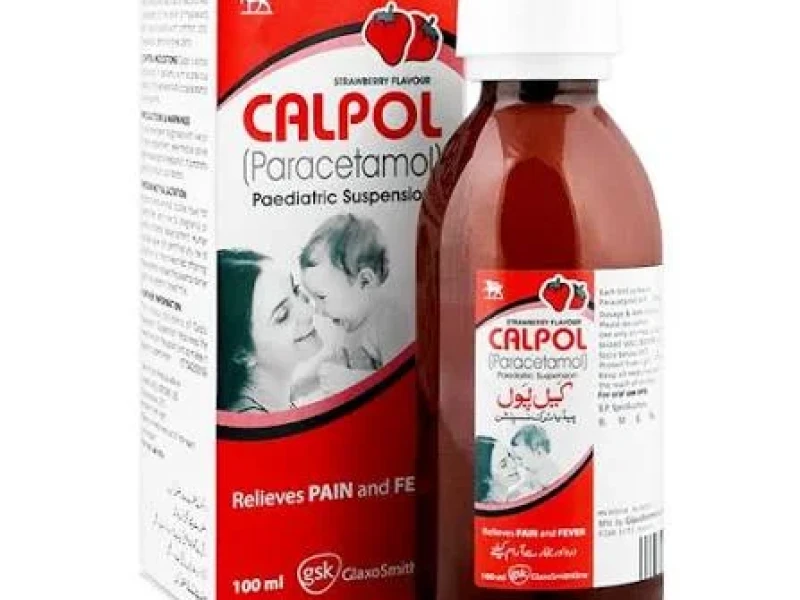
Description
Calpol is a well-known brand of paracetamol (acetaminophen) used primarily for the temporary relief of pain and reduction of fever. Paracetamol belongs to the analgesic and antipyretic group of medicines. It is widely used in adults and children for common conditions such as headache, toothache, sore throat, body aches, muscle pain and fever.
In Pakistan, Calpol is marketed by GlaxoSmithKline (GSK) Pakistan. GSK's current Pakistan product listing includes several Calpol formulations, including Calpol Tablets containing paracetamol 500 mg, Calpol Paediatric Suspension containing paracetamol 120 mg/5 mL, Calpol 6 Plus Suspension containing paracetamol 250 mg/5 mL, and Calpol Plus Tablets containing paracetamol 500 mg with caffeine 65 mg.
Calpol is particularly well known as a paediatric medicine because liquid formulations make it easier to administer an age-appropriate amount of paracetamol to children. However, the different Calpol liquids have different concentrations. For example, 120 mg/5 mL and 250 mg/5 mL are not equivalent strengths, so parents should never assume that the same number of millilitres can be given from different Calpol bottles.
Paracetamol works mainly through the central nervous system to reduce pain and lower an elevated body temperature. Unlike medicines such as ibuprofen and diclofenac, it is not primarily used for its anti-inflammatory effect. Its main clinical roles are therefore pain relief and fever reduction.
Calpol can provide symptomatic relief, but it does not necessarily treat the underlying cause of pain or fever. For example, if a person has a bacterial infection, Calpol may reduce fever and discomfort but does not eliminate the bacteria. Similarly, toothache caused by dental infection may improve temporarily after taking paracetamol, but the dental problem still requires appropriate treatment.
One of the most important safety considerations with Calpol is avoiding accidental overdose. Paracetamol is included in many combination medicines, particularly some cold and flu preparations. Taking Calpol together with another medicine containing paracetamol can result in an excessive total dose and potentially serious liver injury.
Basic Medicine Information
Brand Name: Calpol
Generic Name: Paracetamol
Alternative Name: Acetaminophen
Drug Class: Analgesic and antipyretic
Manufacturer/Marketer in Pakistan: GSK Pakistan
Common Pakistani Formulations: 500 mg tablets, 120 mg/5 mL paediatric suspension, 250 mg/5 mL 6 Plus suspension
GSK Pakistan describes Calpol as one of its key pharmaceutical brands and states that the brand has been present in Pakistan for decades.
Precautions
Calpol may not be suitable for everyone.
Before taking or giving Calpol, seek professional advice if the patient:
Has liver disease
Has kidney disease
Has previously experienced an allergic reaction to paracetamol
Weighs less than 50 kg as an adult
Regularly drinks heavily
Is taking multiple medicines
Is already taking a cold or flu medicine
Has persistent or unexplained pain or fever
People with liver or kidney conditions and those who drink heavily may require individualised advice.
For children, parents should always verify the strength printed on the bottle.
Calpol Drug Interactions
Calpol can interact with certain medicines or require additional caution with them.
Important examples include:
Other Paracetamol-Containing Medicines
This is one of the most important interactions to avoid. Cold, flu and pain medicines may contain paracetamol without the patient realising it.
Taking multiple products containing paracetamol can result in an excessive total dose.
Warfarin
People taking warfarin regularly should discuss repeated or prolonged paracetamol use with a healthcare professional because paracetamol can interact with anticoagulant treatment.
Metoclopramide and Domperidone
These medicines may interact with paracetamol and can affect how quickly it is absorbed. People taking them regularly should ask a healthcare professional for advice.
Flucloxacillin
NHS guidance identifies flucloxacillin as another medicine requiring caution when used with paracetamol.
Patients taking prescription medicines should provide their complete medicine list to their doctor or pharmacist.
Calpol During Pregnancy
Paracetamol is generally considered an appropriate pain-relief option during pregnancy when it is clinically needed and used at the recommended dose. NHS guidance states that paracetamol is usually the preferred painkiller during pregnancy.
However, pregnancy does not mean that higher doses are safe. The lowest effective dose for the shortest necessary duration is generally preferred.
Pregnant women who have persistent pain or fever should speak to a healthcare professional rather than repeatedly self-medicating.
Calpol During Breastfeeding
Paracetamol is generally considered suitable during breastfeeding. NHS guidance states that it is usually the preferred painkiller for people who are breastfeeding.
Nevertheless, patients who have concerns about their baby or who are taking multiple medicines should discuss their treatment with a doctor or pharmacist.
When to See a Doctor
Calpol is intended mainly for temporary symptomatic relief. Medical evaluation is recommended when symptoms are severe, persistent or unusual.
Seek medical attention if:
Fever continues or repeatedly returns.
Pain is severe or getting worse.
A child appears unusually sleepy or seriously unwell.
There is difficulty breathing.
There is significant dehydration.
A seizure occurs.
There is a severe or rapidly spreading rash.
There is facial swelling.
Severe abdominal pain develops.
The person has taken too much Calpol.
Symptoms continue despite appropriate use.
A suspected paracetamol overdose should be treated as urgent because liver damage can occur even when the person initially feels well.
Frequently Asked Questions
What is Calpol?
Calpol is a brand of paracetamol used primarily to relieve pain and reduce fever. GSK Pakistan lists several Calpol formulations for the Pakistani market.
What is the generic name of Calpol?
The active ingredient in standard Calpol products is paracetamol. In the United States and some other countries, the same medicine is called acetaminophen.
Is Calpol a painkiller?
Yes. Paracetamol is an analgesic, meaning it is used to relieve pain. It is also an antipyretic, meaning it can reduce fever.
Is Calpol an antibiotic?
No. Calpol is not an antibiotic. It provides symptomatic relief from pain and fever but does not treat bacterial infections.
Can adults take Calpol?
Yes. Calpol Tablets contain 500 mg paracetamol per tablet according to GSK Pakistan's current product listing. Adults can use standard paracetamol doses when appropriate.
Can children take Calpol?
Yes. Calpol has paediatric formulations. GSK Pakistan lists a 120 mg/5 mL paediatric suspension and a 250 mg/5 mL 6 Plus suspension.
What is Calpol 120 mg/5 mL?
It is a paediatric liquid formulation containing 120 mg of paracetamol in every 5 mL.
What is Calpol 6 Plus 250 mg/5 mL?
It is a higher-concentration paediatric suspension containing 250 mg paracetamol in every 5 mL. GSK Pakistan lists it as a Calpol 6 Plus product.
Can Calpol be given with Panadol?
Both Calpol and Panadol can contain paracetamol. Therefore, they should not normally be taken together because doing so can result in an excessive total paracetamol dose.
Can Calpol be taken with ibuprofen?
Adults can generally take paracetamol and ibuprofen together when appropriate, but patients should follow the recommended doses and consider individual contraindications. For children, NHS guidance recommends not giving ibuprofen and paracetamol at the same time unless advised by a healthcare professional.
Can Calpol be used for fever?
Yes. Reducing fever is one of the principal uses of paracetamol.
Can Calpol be used for toothache?
Yes, it can temporarily relieve toothache. However, persistent toothache should be assessed by a dentist because Calpol does not treat the underlying dental problem.
What happens if too much Calpol is taken?
An overdose of paracetamol can cause serious liver damage and may sometimes affect the kidneys. Urgent medical assessment is required after a suspected overdose, even if the person initially feels well.
Uses
Calpol is mainly used to relieve mild to moderate pain and reduce fever. It may be used by adults and children when the correct formulation and dose are selected.
1. Fever
Calpol can be used to reduce fever and improve discomfort associated with illnesses. Paracetamol is commonly used for high temperature associated with colds, flu and other common illnesses.
For children, the appropriate formulation and dose should be selected according to the child's age and, where appropriate, weight. Parents should always check the label because different Calpol suspensions have different concentrations.
2. Headache
Calpol may provide temporary relief from common headaches. However, recurrent or severe headaches should not be treated repeatedly with painkillers without medical evaluation.
A persistent headache may have an underlying cause that requires assessment by a healthcare professional.
3. Toothache
Paracetamol can temporarily reduce dental pain and make a person more comfortable. However, Calpol does not treat tooth decay, dental abscesses or other underlying dental conditions.
If toothache is severe, persistent or associated with facial swelling, fever or difficulty swallowing, dental or medical assessment is important.
4. Sore Throat
Calpol may help reduce the pain and discomfort associated with a sore throat. It may also reduce fever when fever accompanies the illness.
5. Cold and Flu Symptoms
Paracetamol can help relieve fever and general aches associated with colds and flu. It does not cure the viral infection itself.
Patients should also check combination cold and flu products carefully because some already contain paracetamol.
6. Muscle and Body Pain
Calpol can be used for mild muscle aches and general body pain. This includes temporary aches associated with minor illnesses and some everyday activities.
7. Teething Pain
Age-appropriate children's paracetamol preparations may be used for teething-related discomfort. Parents should follow the instructions for the particular formulation and should not exceed the recommended dose.
8. Earache
Paracetamol may temporarily relieve ear pain in children and adults. However, persistent earache should be evaluated because infections or other conditions may require specific treatment.
9. Minor Aches and Pains
Paracetamol may also be used for various short-term mild aches and pains when appropriate.
Side Effects
Calpol is generally well tolerated when taken at the recommended dose. Paracetamol very rarely causes side effects when used correctly.
Nevertheless, adverse reactions can occur.
Possible Side Effects
Potential side effects include:
Skin rash
Itching
Nausea
Allergic reactions
Bruising or unusual bleeding associated with rare blood-related problems
Liver problems, particularly following excessive dosing
Serious allergic reactions are rare but can include swelling of the throat or tongue, difficulty breathing and a raised, itchy rash. Such symptoms require urgent medical attention.
Liver Damage
The most important safety concern with paracetamol is overdose.
Taking more than the recommended amount can cause serious liver damage. A particularly important point is that a person who has taken too much paracetamol may initially feel completely well. Symptoms may develop later, which is why suspected overdose requires prompt medical assessment rather than waiting for symptoms.
Possible symptoms of significant liver injury can include:
Nausea or vomiting
Abdominal pain
Extreme tiredness
Yellowing of the skin or eyes
Dark urine
Confusion or unusual drowsiness
Anyone who has taken more paracetamol than recommended should seek urgent medical advice.
Dosage
The appropriate Calpol dosage depends on the strength of the product, age and, for children, sometimes body weight & as per Doctor advice.
GSK Pakistan lists Calpol Paediatric Suspension as containing 120 mg paracetamol in every 5 mL.
For a 120 mg/5 mL children's paracetamol liquid, NHS guidance provides age-based examples:
3–5 months: 2.5 mL
6–23 months: 5 mL
2–3 years: 7.5 mL
4–5 years: 10 mL
For children aged 3 months and above, doses can generally be given up to four times in 24 hours when needed, with at least 4 hours between doses.
These figures should not be applied blindly to every child. The product label, child's age, weight and medical circumstances should be considered.
For infants aged 2–3 months, dosing has specific restrictions and should be followed carefully according to professional or product guidance.
Always use the supplied oral syringe or measuring spoon rather than an ordinary kitchen spoon.
Calpol 6 Plus Suspension 250 mg/5 mL
GSK Pakistan lists Calpol 6 Plus Suspension as containing 250 mg paracetamol per 5 mL.
NHS guidance for 250 mg/5 mL six-plus paracetamol liquid gives the following age-based examples:
6–7 years: 5 mL
8–9 years: 7.5 mL
10–11 years: 10 mL
12–15 years: 10–15 mL
16 years and older: 10–20 mL
Doses should be separated by at least 4 hours, with no more than four doses in 24 hours.
The important point is that Calpol 6 Plus 250 mg/5 mL is more concentrated than Calpol Paediatric 120 mg/5 mL. Therefore, parents should never substitute one formulation for another using the same millilitre dose.
Important Dosage Warnings
Do not exceed the recommended dose.
Do not take Calpol with another medicine containing paracetamol unless a doctor or pharmacist has specifically advised you to do so.
For adults using paracetamol for self-treatment, NHS guidance advises not using it for more than 3 days without medical advice. For children, paracetamol should similarly not be given for more than 3 days without speaking to a doctor or pharmacist.
If you suspect that you or your child has taken too much Calpol, seek urgent medical advice even if there are currently no symptoms.