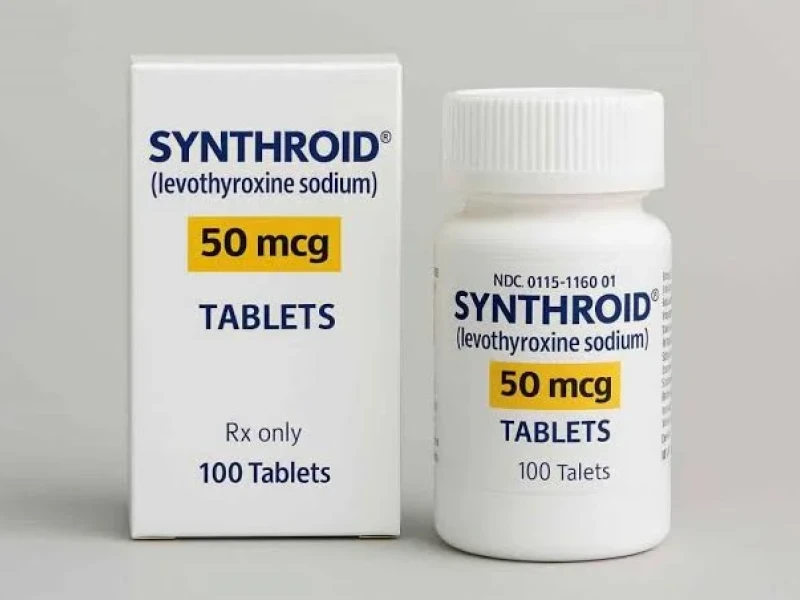
Description
What Is Synthroid?
Synthroid is a brand name for levothyroxine, a prescription medicine used to replace the thyroid hormone that the body is unable to produce in sufficient amounts. It is mainly used to treat hypothyroidism, a condition in which the thyroid gland does not make enough thyroid hormone.
Levothyroxine is a synthetic form of thyroxine (T4), one of the main hormones naturally produced by the thyroid gland. After it is absorbed into the body, some T4 is converted into triiodothyronine (T3), the more active thyroid hormone.
Thyroid hormones are important for metabolism, energy production, heart function, body temperature and many other normal body processes. When thyroid hormone levels are too low, a person may experience tiredness, weight gain, feeling cold, dry skin, constipation, low mood and difficulty concentrating.
Synthroid helps restore thyroid hormone levels and control these symptoms.
How Does Synthroid Work?
Synthroid contains levothyroxine sodium, which replaces the T4 hormone normally produced by the thyroid gland.
The medicine gradually restores the body's thyroid hormone supply. Once the appropriate dose is established, it can help bring thyroid-stimulating hormone (TSH) levels back toward the target range.
Because thyroid hormone replacement works gradually, patients usually need regular blood tests to determine whether their dose is appropriate.
Synthroid and Hypothyroidism
Hypothyroidism can develop for several reasons, including autoimmune thyroid disease such as Hashimoto's thyroiditis, thyroid surgery, radioactive iodine treatment or certain medications.
Synthroid does not cure the underlying cause in most cases. Instead, it provides the thyroid hormone the body needs.
Many people with permanent hypothyroidism require lifelong treatment.
Important Information
Synthroid has a narrow therapeutic range, meaning that taking too much or too little can cause problems. Even small dose changes may affect some patients.
It should be taken consistently, and patients should avoid switching between different levothyroxine products without discussing the change with their healthcare professional.
Uses
Treatment of Hypothyroidism
The primary use of Synthroid is the treatment of hypothyroidism.
When the thyroid does not produce enough hormones, levothyroxine replaces the missing hormone and helps restore normal thyroid function.
Treatment can improve symptoms such as fatigue, cold intolerance, constipation and low energy when these symptoms are related to hypothyroidism.
Hashimoto's Thyroiditis
Synthroid is commonly prescribed for people with Hashimoto's thyroiditis, an autoimmune condition that can gradually reduce thyroid function.
If Hashimoto's causes permanent hypothyroidism, thyroid hormone replacement is often required long term.
After Thyroid Surgery
People who have part or all of their thyroid removed may need levothyroxine.
The required dose depends on how much thyroid tissue remains and the reason for surgery.
After Radioactive Iodine Treatment
Radioactive iodine may be used to treat certain thyroid conditions. It can subsequently lead to an underactive thyroid.
Synthroid may then be prescribed to replace the thyroid hormone that the body can no longer produce adequately.
Congenital Hypothyroidism
Some babies are born with an underactive or absent thyroid gland.
Early thyroid hormone replacement is essential in congenital hypothyroidism because thyroid hormones are important for normal brain development and growth.
Goiter
In selected patients, levothyroxine may be used to treat or prevent certain types of goiter, particularly when thyroid hormone deficiency contributes to thyroid enlargement.
Treatment depends on the underlying cause.
Thyroid Cancer
Levothyroxine may be used after treatment for certain types of thyroid cancer.
In some patients, the dose is adjusted to keep TSH below the normal range because TSH can stimulate the growth of certain thyroid cancer cells.
This type of treatment requires specialist monitoring.
Important Consideration
Synthroid should not be used simply for weight loss.
Taking thyroid hormone when thyroid function is normal can cause dangerous effects, including abnormal heart rhythms, bone loss and other symptoms of excessive thyroid hormone.
Side Effects
When Synthroid is taken at the correct dose, most people tolerate it well. Side effects are more likely when the dose is too high or when thyroid hormone levels become excessive.
Increased Heart Rate
Too much levothyroxine can cause a faster heartbeat.
Some people may notice pounding or racing of the heart.
Palpitations
Palpitations, or the sensation of an unusually strong or irregular heartbeat, can occur when thyroid hormone levels become too high.
Persistent palpitations should be medically assessed.
Nervousness
Excess thyroid hormone can cause nervousness, irritability or feeling unusually restless.
Tremors
Fine shaking or trembling of the hands can occur when the dose is excessive.
Sweating
Increased sweating and heat intolerance are possible signs of excessive thyroid hormone.
Difficulty Sleeping
Some patients taking too much Synthroid may develop insomnia or difficulty staying asleep.
Headache
Headache can occur, particularly when thyroid hormone levels are changing.
Weight Loss
Unexpected weight loss can occur if the dose is higher than required.
This is not a reason to increase Synthroid for weight management.
Increased Appetite
Some people may experience increased appetite when thyroid hormone levels become excessive.
Diarrhea
Excess thyroid hormone can speed up intestinal activity and may cause loose stools or diarrhea.
Muscle Weakness
Too much thyroid hormone may contribute to muscle weakness, particularly if the condition is prolonged.
Menstrual Changes
Women may experience changes in menstrual periods when thyroid hormone levels are not adequately controlled.
Bone Loss
Long-term excessive thyroid hormone replacement can contribute to reduced bone density, particularly in postmenopausal women.
This is one reason regular TSH monitoring is important.
Serious Heart Problems
Excessive thyroid hormone can place additional stress on the heart.
People with existing heart disease may have a greater risk of angina, abnormal heart rhythms or other cardiovascular complications.
Allergic Reactions
True allergy to levothyroxine itself is uncommon, but reactions to inactive ingredients or tablet components can occur.
Seek emergency medical care for facial swelling, difficulty breathing or a severe rash.
Dosage
Individualized Dosage
The correct Synthroid dose is highly individualized.
Doctors consider age, body weight, thyroid function, heart health, pregnancy status, other medicines and the underlying cause of hypothyroidism.
Blood tests, particularly TSH and sometimes free T4, are used to adjust the dose.
Usual Adult Dose
There is no single dose suitable for every adult.
A full replacement dose for a healthy younger adult with little or no thyroid function may be around 1.6 micrograms per kilogram of body weight per day, but many patients require less.
Treatment is often started at a lower dose and adjusted according to blood test results.
Starting Dose in Older Adults
Older adults, particularly those with coronary artery disease, are usually started on a lower dose.
The dose may be increased gradually while monitoring thyroid function and heart symptoms.
Children and Infants
Children require weight-based dosing, and infants with congenital hypothyroidism may require relatively higher doses per kilogram than adults.
Pediatric thyroid replacement should always be supervised by a healthcare professional.
Pregnancy Dosage
Pregnancy increases the body's requirement for thyroid hormone in many women.
Patients already taking levothyroxine may need a dose adjustment early in pregnancy, followed by regular thyroid blood tests.
Do not change the dose without medical advice.
How to Take Synthroid
Synthroid is generally taken once daily on an empty stomach, preferably 30 to 60 minutes before breakfast.
Take it with a full glass of water.
Consistency is important because food and certain supplements can significantly affect absorption.
Bedtime Dosing
Some patients may take levothyroxine at bedtime if it is taken consistently several hours after the last meal.
The important point is to follow the schedule recommended by your healthcare professional and maintain consistent timing.
Missed Dose
If you forget a dose, take it when you remember unless it is close to the next scheduled dose.
Do not routinely double doses without medical advice.
If you frequently forget your medicine, discuss strategies for improving adherence with your pharmacist or doctor.
Overdose
Taking too much Synthroid can cause symptoms of excessive thyroid hormone, including rapid heartbeat, tremors, sweating, anxiety and chest discomfort.
Large overdoses can be dangerous and may cause serious heart problems.
Seek medical advice promptly if a significant overdose occurs.
Synthroid and Food
Food can reduce the absorption of levothyroxine.
For this reason, Synthroid is generally taken on an empty stomach before breakfast.
Certain high-fiber foods may also affect absorption in some people.
Try to take the medicine consistently in relation to meals so that thyroid hormone levels remain stable.
Synthroid and Calcium
Calcium supplements can significantly reduce levothyroxine absorption.
If you take calcium supplements, antacids containing calcium or other calcium-containing products, they should generally be separated from Synthroid by at least four hours.
Ask your pharmacist if you are unsure about timing.
Synthroid and Iron
Iron supplements can also interfere with levothyroxine absorption.
Iron-containing medicines or supplements should generally be taken at least four hours apart from Synthroid.
Synthroid and Antacids
Some antacids containing aluminum or magnesium may reduce levothyroxine absorption.
Separate these products from Synthroid as recommended by your healthcare professional.
Synthroid and Other Medicines
Many medicines can affect thyroid hormone absorption or metabolism.
Tell your doctor about all prescription medicines, over-the-counter products and supplements you use.
Examples include certain cholesterol medicines, acid-reducing medicines, seizure medicines and hormone therapies.
Synthroid and Diabetes Medicines
Starting or changing thyroid hormone therapy can affect blood glucose control.
People with diabetes may require closer monitoring when Synthroid treatment is started or adjusted.
Synthroid and Warfarin
Levothyroxine can increase the effect of warfarin in some patients as thyroid hormone levels are corrected.
People taking warfarin may need closer monitoring of blood clotting after starting or changing Synthroid.
Synthroid During Pregnancy
Adequate thyroid hormone is important during pregnancy for both maternal health and fetal development.
Levothyroxine is commonly used during pregnancy when thyroid hormone replacement is needed.
Women with hypothyroidism should have their thyroid levels monitored regularly during pregnancy because the required dose may increase.
Synthroid and Breastfeeding
Levothyroxine can generally be used during breastfeeding when clinically indicated.
Maintaining appropriate thyroid hormone levels is important for the mother's health and well-being.
How Long Does Synthroid Take to Work?
Some symptoms may gradually improve within a few weeks, but it can take several weeks for thyroid hormone levels to stabilize after starting or changing the dose.
TSH is commonly checked about 6 to 8 weeks after a dose adjustment in many adults because it takes time for the body to reach a new steady state.
Do not increase the dose simply because you do not feel better immediately.
Long-Term Use of Synthroid
Many people with permanent hypothyroidism need Synthroid or another levothyroxine product for life.
Stopping treatment without medical advice can cause thyroid hormone levels to fall again and symptoms of hypothyroidism to return.
Monitoring Thyroid Levels
Regular blood tests are an important part of treatment.
Your doctor may monitor:
TSH
Free T4 when appropriate
Symptoms and physical findings
Heart rate and cardiovascular symptoms
Other relevant health factors
The dose can then be adjusted according to the results.
Synthroid for Weight Loss
Synthroid should never be used as a weight-loss medicine in people with normal thyroid function.
Taking excessive thyroid hormone can cause muscle loss, heart problems, bone loss and potentially life-threatening complications.
When to Seek Medical Help
Seek urgent medical attention if you develop severe chest pain, fainting, a very rapid or irregular heartbeat, severe shortness of breath or symptoms suggesting a serious overdose.
Contact your doctor if you experience persistent palpitations, tremors, unexplained weight changes, severe anxiety or other symptoms suggesting that your thyroid hormone dose may be too high or too low.
Important Dosage Advice
Synthroid should be taken exactly as prescribed and at a consistent time each day. Do not change the dose, switch products or stop treatment without consulting your healthcare professional. Keep calcium, iron and certain antacid products separated from levothyroxine because they can reduce its absorption.
Note: This information is for general educational and SEO purposes and does not replace advice from a qualified doctor or pharmacist. The appropriate Synthroid dose depends on thyroid function, age, weight, heart health, pregnancy status, other medicines and individual treatment response.